Get to know DEVOPS
09, JulIntroduction to DevOps: Connecting Development and Operations
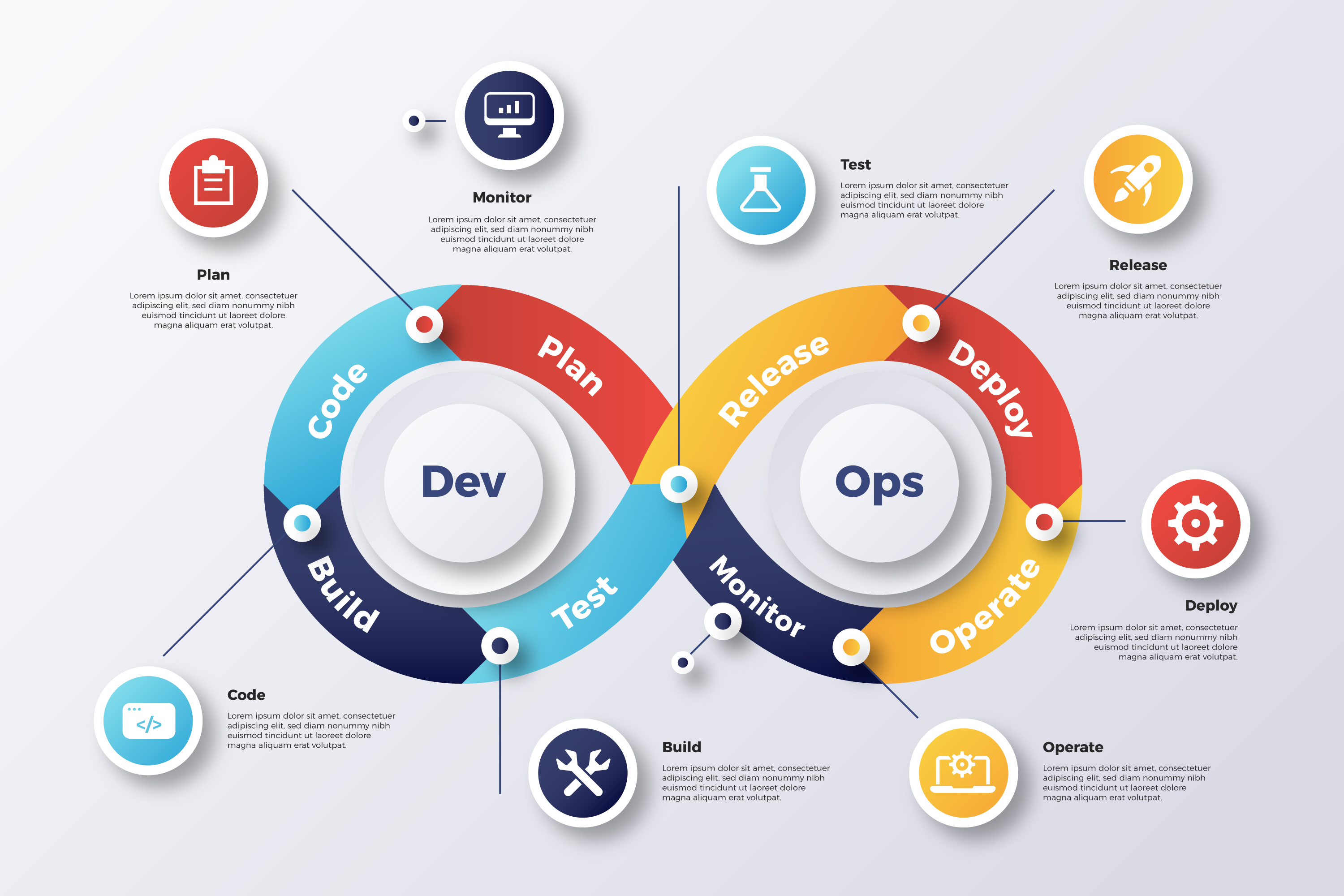
In the rapidly evolving world of technology, DevOps has become a revolutionary approach to software development. DevOps is a combination of "Development" (development) and "Operations" (operations) which aims to speed up and increase efficiency in the software life cycle. With this approach, companies can improve collaboration between development teams and operational teams, speed up software delivery, and improve the quality and stability of the systems being developed.
As the need for speed and accuracy in software development increases, DevOps emerges as a solution to overcome various challenges faced by companies. Not only does it focus on code development, but DevOps also includes infrastructure management, automation, and overall system performance monitoring. By implementing DevOps, companies can reduce barriers between developers and operational teams, and increase efficiency in the software development cycle.
Definition and Basic Principles of DevOps
DevOps is not just a tool or technology, but a work philosophy that emphasizes communication, collaboration, and automation. The main principles in DevOps include Continuous Integration (CI) and Continuous Deployment (CD), process automation, and continuous monitoring and feedback. By applying these principles, companies can reduce the wait time between software development, testing, and deployment.
In addition, the DevOps approach also emphasizes the importance of Infrastructure as Code (IaC), which allows operational teams to manage infrastructure in a way that is more efficient, automated, and easily replicable. This means that servers, networks, and other configurations can be managed like source code, so changes can be made quickly and more reliably.
The Role of DevOps in Application Development
In the software development process, DevOps plays a very crucial role in simplifying the workflow and increasing team efficiency. Using CI/CD pipelines, code developed by teams can be tested and deployed to production environments automatically. This reduces manual errors, speeds up release times, and enables earlier bug detection and fixing.
Apart from that, DevOps also helps in implementing more flexible deployment strategies such as Blue-Green Deployment and Canary Deployment. With this strategy, companies can carry out updates without disturbing end users, thereby minimizing the risk of downtime that could impact the business.
In the security aspect, DevOps also has an approach known as DevSecOps, namely integrating security into the software development cycle from an early stage. With this, security is no longer the last step before a product is released, but instead becomes part of every stage of development.
Implementation of DevOps in the Company
To implement DevOps in a software development company, work culture changes and the adoption of various technologies are required. Companies can leverage tools like Docker and Kubernetes for container management, Jenkins and GitLab CI/CD for pipeline automation, and Prometheus and Grafana for system monitoring. In addition, collaboration between teams must be strengthened through more open communication, for example by using platforms such as Slack or Microsoft Teams.
Implementing DevOps is not just about adopting technology, it also requires a cultural change in the organization. Development and operations teams must work closely together, share responsibilities, and have a common understanding of the company's business goals. Therefore, training and improving skills are the main keys to the successful adoption of DevOps in an organization.
Benefits of DevOps for Companies
DevOps adoption brings many benefits to companies, including:
- Faster Software Delivery – With automation and CI/CD pipelines, companies can release software more frequently and with less risk.
- Better Product Quality – Earlier and more frequent testing allows for faster bug detection, thereby improving the quality of the resulting software.
- Higher Operational Efficiency – Managed as code (IaC) infrastructure enables broader automation, reduces manual intervention, and accelerates change implementation.
- Improve Security – By integrating security from the start (DevSecOps), companies can reduce the risk of vulnerabilities that can be exploited by irresponsible parties.
- Better Scalability – With technologies like Kubernetes, companies can easily scale their applications according to business needs.
Conclusion
DevOps has become the standard in modern software development due to its ability to improve efficiency and product quality. By adopting DevOps, companies can face software development challenges with more flexibility and responsiveness. However, implementing DevOps is not just about technology, but also a cultural change that encourages better collaboration and innovation within an organization.
To get the most out of DevOps, companies need to invest in training, the right tools, and organizational culture changes. In this way, companies can achieve faster, safer, and more efficient software development, which will ultimately provide more value to the business and customers.